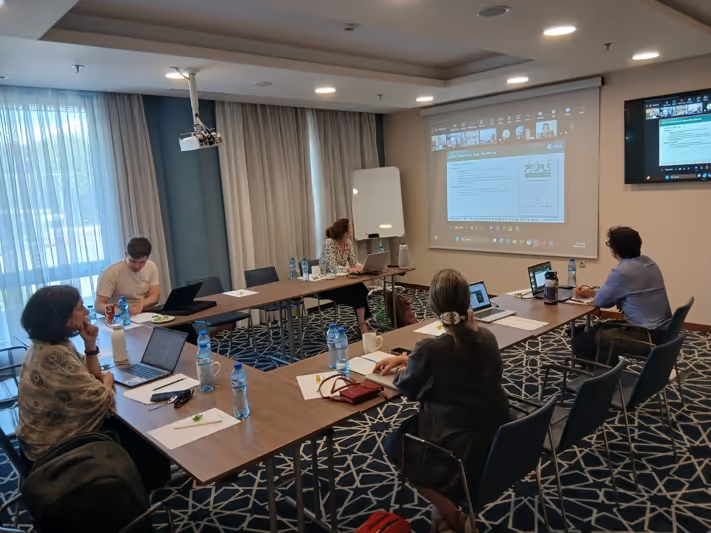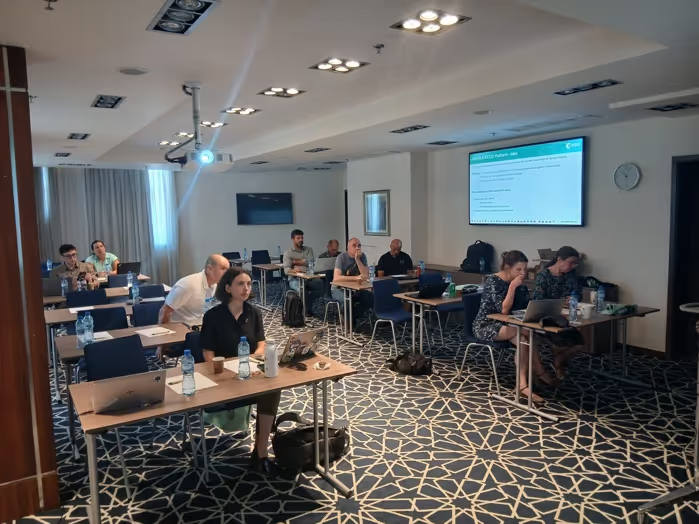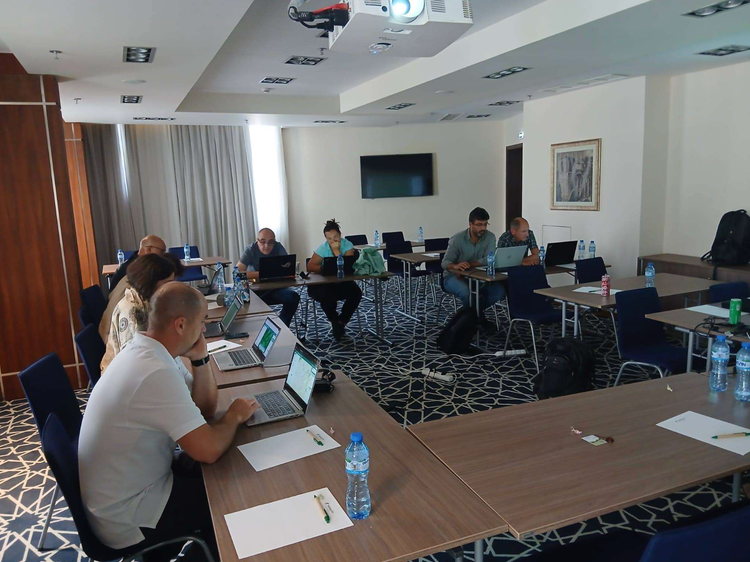
The Bulgarian Society for the Protection of Birds (BSPB) is one of the Early Adopters within the PEOPLE-ECCO project. On 6 July 2026, the PEOPLE-ECCO consortium travelled to Plovdiv, Bulgaria, for an in-person workshop with BSPB and their local conservation network to demonstrate the grassland monitoring tools developed together over the course of the project. During this trip, the PEOPLE-ECCO team presented in BEeS2026, the Biodiversity and Ecosystem eScience Conference organized by LifeWatch ERIC.
Founded in 1988, Bulgarian Society for the Protection of Birds is the first nature conservation NGO registered in Bulgaria and the national partner of BirdLife International. Its mission is to prevent the extinction of endangered bird species through field conservation, threat mitigation and population reinforcement programmes.
Since 2007, BSPB has acquired more than 800 hectares across six regions. These acquisitions help protect key sites with valuable habitats for bird species, restore them, improve habitat connectivity, and prevent large-scale land-use change, for example, by securing plots in areas threatened by developments such as photovoltaic parks.
Despite this, grasslands are still under pressure in many ways: conversion to arable land, natural succession, the development of solar power plants, climate change leading to drought and reduced productivity, and both overgrazing and undergrazing. Depending on the height of the grass, rodents remain accessible as prey for endangered raptors. By protecting these grasslands, BSPB is protecting the food chain that sustains the birds.
In this regard, BSPB needed a long-term, cost-effective tool for monitoring these natural processes at a large scale, covering multiple locations across the country both within and outside their sites to assess habitat quality before and after acquisition.
The morning session on 6 July opened with an introduction to PEOPLE-ECCO by Wieteke Willemen from ITC Faculty of the University of Twente, who outlined how Earth Observation can support conservation organisations by covering large geographic areas over long and regular time series. BSPB then presented its role as Early Adopter in the project and explained why the collaboration had focused on grasslands.
Marcos Kavlin Castaneda from Hatfield went deeper into the PEOPLE-ECCO solutions for grassland monitoring and conservation prioritisation. Central to these is the Vegetation Productivity Trend, an indicator derived from Sentinel-2 monthly time series that can detect trends of increase, stability, or decline across large areas.
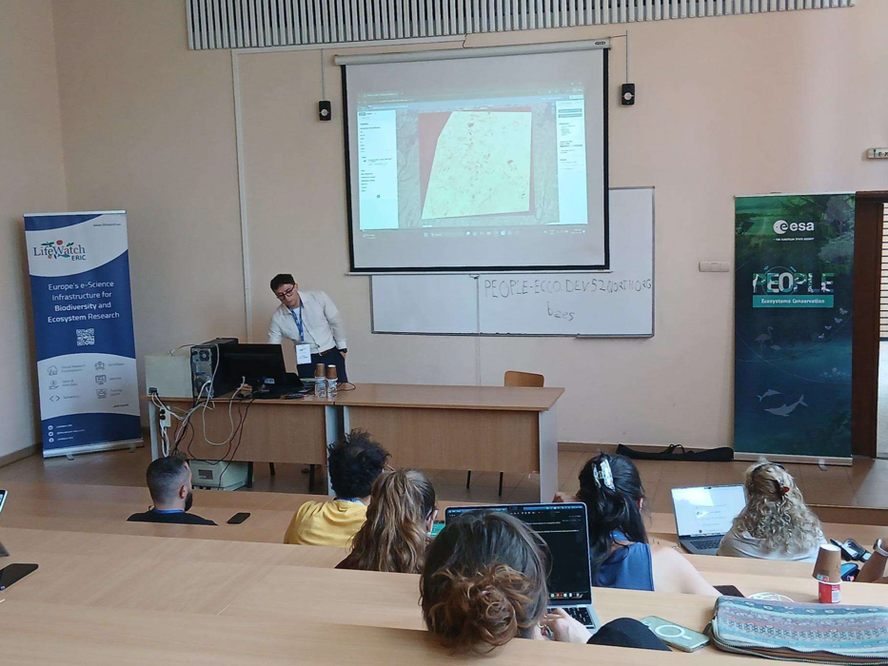
Marcos Kavlin Castaneda intervention in the PEOPLE-ECCO workshop
Kavlin Castaneda illustrated the approach with the Sakar region as example, showing how productivity trends can be combined with datasets to prioritise the conservation needs of a landscape.
After a coffee break, Jan Speckamp from 52° North demonstrated the PEOPLE-ECCO platform. Many Earth Observation tools already exist, but they are heavily geared towards experts. This platform was designed to bridge that gap by creating a simple web interface, predefined algorithms and parameters, and hosted processing. Its intended audience ranges from GIS experts using it as an exploration tool, to domain experts and other non-technical users who need direct input for decision-making.
|
|
The morning session from the workshop in Plovdiv brought partners together
The afternoon session continued with a deep dive into the platform. Participants logged in, tested the tool on their own test sites, and executed the Vegetation Productivity Trend algorithm, working directly with the tools and providing feedback to the PEOPLE-ECCO team.
The session closed with a discussion of BSPB's large-scale demonstration which included an analysis exercise in QGIS, in which participants normalised and weighted spatial layers to produce a grassland conservation priority score for the Sakar region. The discussion also covered how this analysis could be used to assess whether changes observed in parcels under BSPB management can be attributed to management intervention.
The feedback gathered in Plovdiv will be incorporated into the final stages of the project, as PEOPLE-ECCO approaches its conclusion in September 2026. This follows PEOPLE-ECCO's co-design principles, ensuring that the tools are shaped by the organisations that will use them.
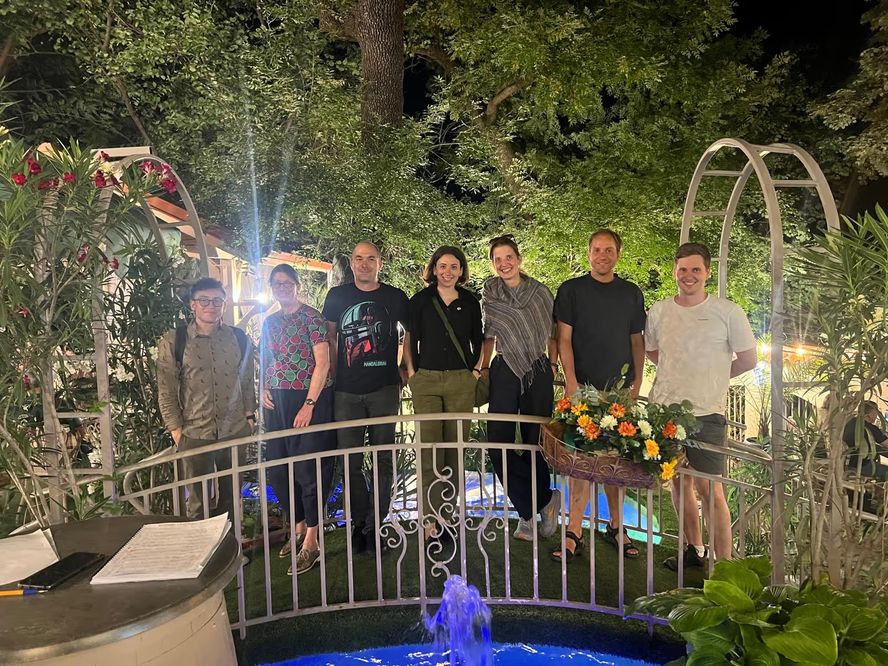
PEOPLE-ECCO members meeting after a successful session
In the coming months, the consortium will coordinate with BSPB to complete the validation of the large-scale demonstration, finalise the integration of the solutions into the platform, and complete the development of a user handbook.
PEOPLE-ECCO’s materials include free Geoversity online courses on Earth Observation for ecosystem conservation (Part I live, Part II published in August 2026).
If you are interested in the activities of BSPB, you can learn more about them via their official website.